
ChatGPT Ads Are Here: Inside OpenAI’s High-Stakes Advertising Pivot
OpenAI promised AI without the clutter. Now, ChatGPT is running ads, launching tracking pixels, and targeting a $100 billion revenue goal. Here is the expert analysis on what just happened.

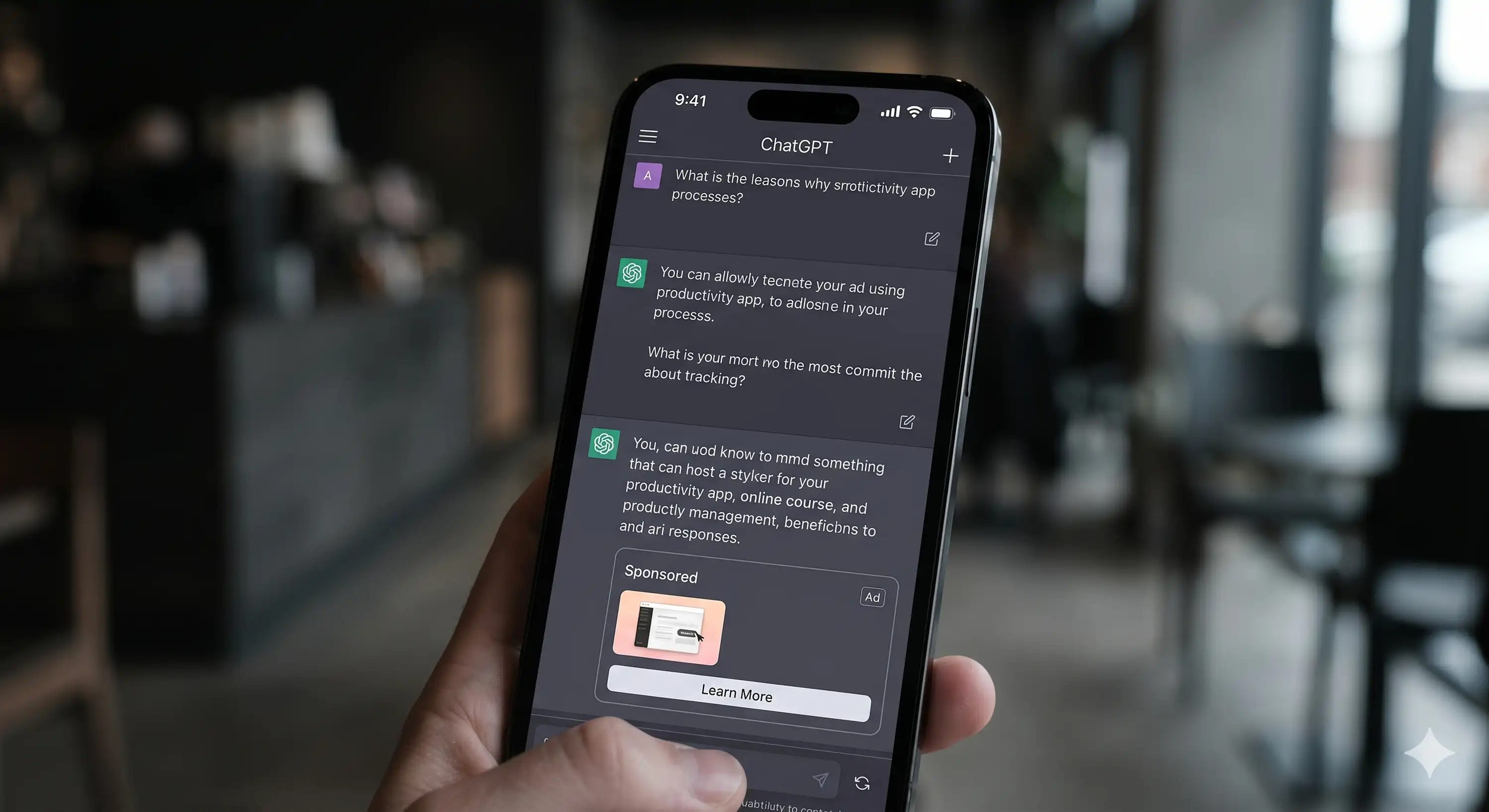
The AI Ad Rush: Why ChatGPT Just Copied Google’s Playbook
Remember when the promise of generative AI was a clean, uninterrupted, ad-free digital sanctuary? Well, reality just hit the balance sheet.
On February 9, 2026, OpenAI quietly rolled out the highly anticipated (and deeply controversial) launch of advertisements within ChatGPT for its Free and new low-cost “Go” tier users.
For a company whose CEO, Sam Altman, once described integrating ads and AI as “uniquely unsettling” back in 2024, the pivot has been nothing short of whiplash-inducing. Here is the expert analysis on the rumors, the revenue targets, and how the AI advertising war is officially unfolding.
The 10-Week Pivot: From “Premium” to Performance Marketing
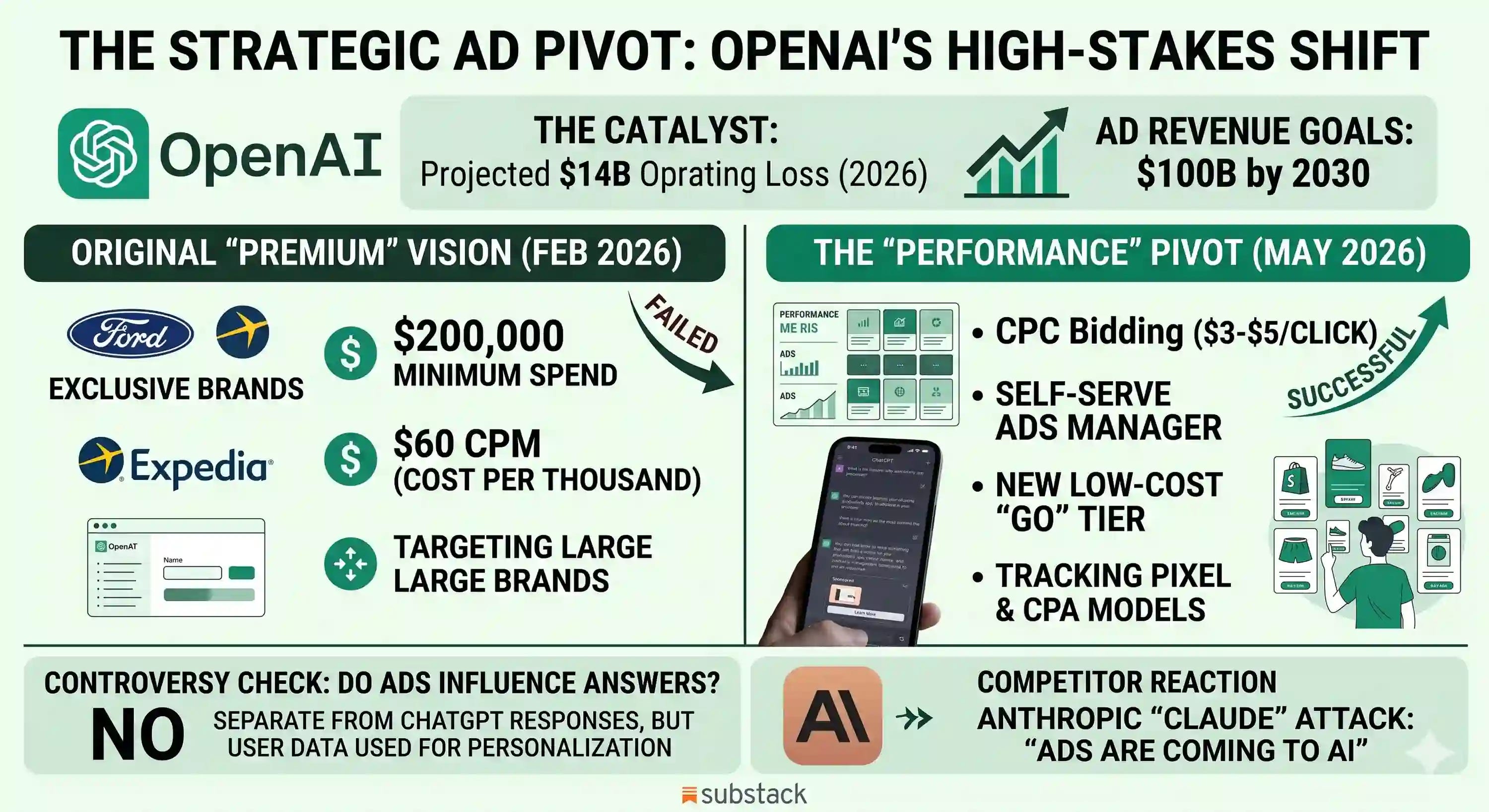
When OpenAI first switched on the ad machine in February, they came out swinging with an elitist, traditional media model: a $200,000 minimum spend and a massive $60 CPM (Cost Per Mille / thousand impressions), courting early big-box names like Target, Ford, and Expedia.
It didn’t hold.
By late April, leaked pitch decks revealed those CPMs had plummeted to as low as $15. Advertisers weren’t seeing the ROI simply from having their logo displayed below a chatbot’s answer. In an aggressive pivot to save the initiative, OpenAI abandoned its premium posture and embraced the gritty reality of Big Tech monetization.
As of late May 2026, OpenAI has officially transitioned into a performance-marketing juggernaut. They introduced CPC (Cost-Per-Click) bidding—recommending $3 to $5 per click—and just rolled out a tracking pixel and self-serve Ads Manager aimed at small businesses. They are now actively moving toward CPA (Cost-Per-Action) models, charging marketers only when a user actually buys something or signs up.
Claire Holubowskyj, a senior research analyst at Enders Analysis, sums up the strategic shift perfectly:
“Launching CPA advertising is a logical next step for OpenAI’s ads business. It expands its offering while diversifying its pool of advertisers, and aligns its product more closely with that of Meta and Google, whom it must compete effectively against to reach its own targets.”
Why the rush? The math is brutal. Despite generating an astonishing $13 billion in 2025 revenue, OpenAI is projected to lose approximately $14 billion in 2026 on compute and infrastructure alone. The company is eyeing a $2.5 billion ad revenue target for this year, scaling to $100 billion by 2030. They don’t just want ad money; they mathematically require it.
Rumor Checking: Are Advertisers Influencing Your Prompts?
Whenever ads enter a trusted search ecosystem, the same rumor inevitably surfaces: Is the AI recommending this because it’s the best answer, or because someone paid for it?
The Verdict: Currently False, But the Line is Blurring.
OpenAI has gone on the defensive to protect user trust. According to their official documentation, ads are generated independently from ChatGPT’s responses and are visually separated at the bottom of the chat. The company explicitly states: “Ads do not influence answers.” Furthermore, conversations remain private from advertisers, and they refuse to run ads on sensitive topics like mental health or politics. Plus, Pro, Business, and Enterprise users (along with minors) remain completely ad-free.
However, the introduction of the new OpenAI tracking pixel and personalized ad targeting changes the dynamic. If you have “Personalized Ads” enabled, ChatGPT will use your current thread, past chats, and account memories to serve you relevant product cards. While the answer isn’t bought, the AI is absolutely reading your intimate queries to figure out what you might buy next.
Surfing the Trend: The Competitor Backlash
OpenAI’s closest competitors are already weaponizing this pivot.
Anthropic—founded by former OpenAI safety researchers—used the 2026 Super Bowl to launch a direct, highly provocative attack on ChatGPT’s new business model. Positioning their Claude AI as the secure, “enterprise-first” alternative, Anthropic aired commercials showing users asking an AI chatbot for fitness or relationship advice, only for the bot to awkwardly pivot into a hard sell for insoles and consumer products.
The ad’s chilling tagline? “Ads are coming to AI.”
It was a brilliant PR move that perfectly captured the public’s anxiety. Search engines require clear buying intent (e.g., “buy running shoes”). But AI chatbots act as conversational confidants. Slipping advertisements into a deeply personal, ongoing chat about your life challenges feels inherently more invasive.
The Bottom Line
OpenAI is no longer just an AI research lab; it is an advertising network competing directly with Google and Meta. While the free tier remains highly capable, the implicit cost of that compute power is finally being passed down to the user. The era of the ad-free AI assistant is over—unless you’re willing to pay the monthly premium.
Also read: